The Mystery of the Cross and the Freedom of Evangelism

There are things we can understand without ever exhausting their mystery.
The cross is one of them.
We can study it for a lifetime.
We can read the Scriptures, trace the themes of sacrifice and redemption, wrestle with the meaning of substitution, speak of justice and mercy, sin and grace, suffering and love.
And yet, when we stand before the cross, there remains something that is beyond us.
That God should love sinners is already astonishing.
That He should give His Son for them is a mystery before which even our best explanations eventually fall silent.
“Oh, how great are God’s riches and wisdom and knowledge! How impossible it is for us to understand his decisions and his ways! Romans 11:33 · NLT
Perhaps this is something we need to remember when we speak about Christ to another person.
We are not carrying a message that can be reduced to an argument and successfully transferred from one mind to another.
The gospel can be explained.
It can be reasoned about.
It can be defended.
But it cannot be manufactured in another person’s heart.
The gospel can be explained. It can be reasoned about. It can be defended. But it cannot be manufactured in another person’s heart.
The Mind Is Not Bypassed
Christianity does not ask us to abandon our intellect.
We are called to love God with our minds. We should think carefully, study faithfully, ask difficult questions and seek to communicate the truth as clearly as we can.
The mind matters.
But the mind is not everything.
There is a difference between understanding something intellectually and being brought to faith.
I can explain the cross to someone.
I cannot make the cross precious to them.
I can explain sin.
I cannot create conviction of sin.
I can tell someone about the love of Christ.
I cannot make them see that love.
I can give reasons for believing.
I cannot give someone faith.
There is another Person at work.
The Holy Spirit is not an optional addition to evangelism. He is the One who opens what we cannot open, illuminates what we cannot illuminate, and brings conviction where our words alone cannot reach.
Jesus said of the Spirit:
“And when he comes, he will convict the world of its sin, and of God’s righteousness, and of the coming judgment.” John 16:8 · NLT
Our intellect is therefore not bypassed—but neither is it sufficient.
That distinction matters.
The Holy Spirit is not an optional addition to evangelism. He is the One who opens what we cannot open, illuminates what we cannot illuminate, and brings conviction where our words alone cannot reach.
The Work Beneath Our Work
Perhaps we sometimes place a burden upon ourselves that God never intended us to carry.
We wonder whether we said the right thing.
Whether our explanation was clear enough.
Whether we answered every objection.
Whether we found the perfect illustration.
Whether we were persuasive enough.
And so evangelism can quietly become a performance.
But Paul gives us another picture.
“I planted the seed in your hearts, and Apollos watered it, but it was God who made it grow.” 1 Corinthians 3:6 · NLT
Paul planted.
Apollos watered.
But God gave the growth.
There is something wonderfully liberating about this.
The planting was real.
The watering was real.
Their labour mattered.
But the life was God’s to give.
We participate in the work of the gospel, but we do not carry the burden of being its author.
That should make us humble.
But perhaps even more surprisingly, it should make us bold.
Under the Hand of Another
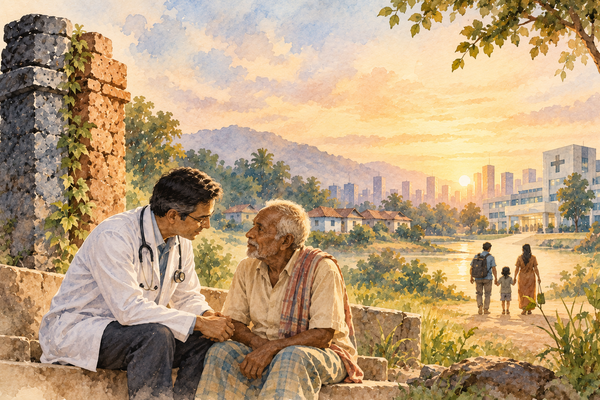
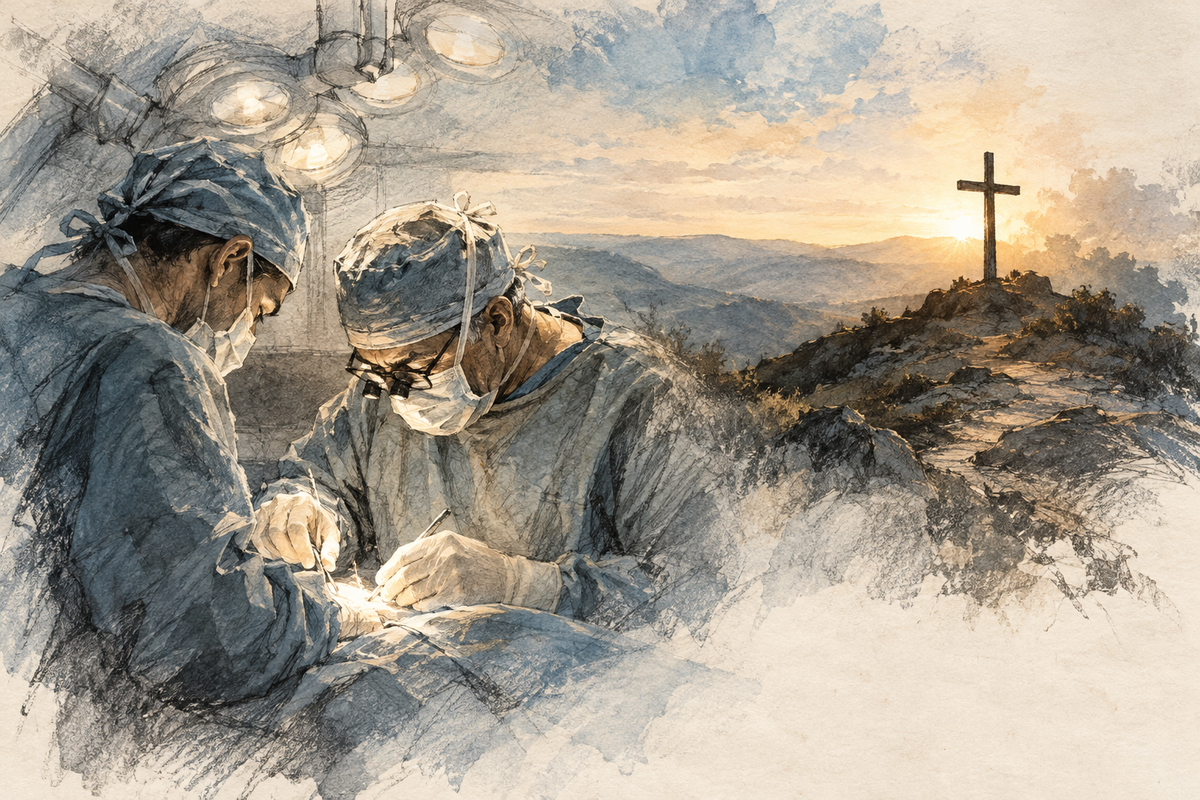
I have sometimes thought about this in relation to surgery.
There are operations in which one works alongside a senior surgeon whose experience is considerably greater than one’s own.
The case may be complex.
The anatomy may be difficult.
The decisions may have significant consequences.
Yet, when I am operating with that surgeon, something changes in the way I carry the responsibility.
I may still perform part of the procedure.
I may dissect.
I may expose.
I may place sutures.
I may even perform a substantial portion of the operation.
I am genuinely operating.
But I am not operating alone.
There is someone beside me who sees the whole operation in a way that I cannot.
Someone who knows what lies ahead.
Someone who has carried this responsibility many times before.
If something unexpected happens, I know whose hands ultimately hold the case.
That knowledge does not make me careless.
It makes me attentive.
It makes me teachable.
And, strangely, it makes me more confident.
I can put my hands to the work because I know that the entire weight of the operation does not rest upon me.
Evangelism Has a Similar Freedom
Perhaps our work as witnesses is something like this.
We speak.
We explain.
We listen.
We answer.
We testify.
We open the Scriptures.
We tell someone what Christ has done for us.
We may even find ourselves having conversations that require careful thought and difficult answers.
All of that matters.
But beneath our work, God is at work.
We are not the Holy Spirit.
We are not the ones who give spiritual life.
We are not the ones who open blind eyes.
We are not the ones who draw a person to Christ.
We are witnesses to something God Himself is doing.
And knowing this changes the way we evangelise.
A quieter confidence
I do not have to save the person to whom I am speaking.
I only have to be faithful with what God has entrusted to me.
When We Do Not Know What to Say
This is particularly freeing when we encounter someone whose questions are greater than our knowledge.
Sometimes we imagine that before we can speak about Christ, we must have an answer for everything.
We don’t.
There will always be questions we cannot answer.
There will always be theological mysteries that remain beyond us.
There will always be objections for which we need time to think.
Humility allows us to say:
“I don’t know.”
And then:
“But let me tell you what I do know.”
I know what Christ has done.
I know what grace has meant in my own life.
I know that the cross stands at the centre of the Christian story.
I know that I cannot manufacture faith in another person.
And I know that the Holy Spirit is able to do what I cannot.
That is not intellectual weakness.
It is dependence.
The Humility of the Cross
There is something deeply appropriate about this.
The message of the cross itself destroys our tendency to boast.
If salvation depended upon the brilliance of the preacher, the eloquence of the evangelist or the intellectual ability of the listener, then perhaps there would be room for human achievement.
But the gospel leaves us standing on grace.
The messenger needs grace.
The hearer needs grace.
The understanding needs grace.
The response needs grace.
Even our ability to faithfully proclaim the gospel is itself a gift.
And so evangelism becomes less about my ability to convince someone and more about my willingness to be faithful.
We plant.
We water.
We pray.
And we leave the growth with God.
And That Makes Us Bolder
This is where the mystery becomes strangely freeing.
If the entire outcome depended upon me, I would be terrified to speak.
What if I say something wrong?
What if they ask a question I cannot answer?
What if they reject me?
What if I cannot explain the gospel adequately?
But if God is already at work, I can step forward with a different kind of courage.
Not the courage of someone who has all the answers.
The courage of someone who knows Who does.
“For we are God’s masterpiece. He has created us anew in Christ Jesus, so we can do the good things he planned for us long ago.” Ephesians 2:10 · NLT
My responsibility is faithfulness.
God’s responsibility is far greater.
And that distinction does not diminish my part.
It puts my part in its proper place.
The Freedom of Being a Witness
Perhaps this is one of the quiet paradoxes of evangelism:
The more deeply we understand our dependence upon God, the more freely we can participate in His work.
We do not need to be brilliant enough to save someone.
We do not need to be persuasive enough to change a heart.
We do not need to know everything before we can speak.
We need to be faithful.
Available.
Prayerful.
Truthful.
And willing to speak when God gives us the opportunity.
The rest belongs to Him.
“God made it grow.” 1 Corinthians 3:6
Those four words can take a great weight from our shoulders.
We plant.
We water.
We sometimes wait.
And sometimes, to our great joy, we see something begin to grow.
But when it does, we know where the glory belongs.
The mystery of the cross is too great for us to master.
The love of God is too deep for us to exhaust.
The human heart is too mysterious for us to transform.
And yet God, in His kindness, allows us to stand beside His work.
To speak.
To pray.
To witness.
To participate.
Like a surgeon working under the hand of one far more experienced, we put our hands to the work—not because the whole burden rests upon us, but because the One who holds the whole operation has invited us to participate.
Perhaps that is where authentic evangelism begins.
Not with confidence in ourselves.
But with confidence in Him.
And perhaps that is also where humility and boldness meet.
We are humble enough to know that we cannot do God’s work.
And bold enough to do the work He has given us to do.