If You Go With Me

We sing many songs about the great deliverances of God.
We sing of the Red Sea that opened, Jericho whose walls fell, Daniel who came out of the lions' den, the three Hebrew young men who walked through the fire, and the apostles whom God delivered from prison. These are wonderful reminders of what our God can do. When we sing them, we are often expressing a sincere prayer of our own: “Lord, do the same for me. Deliver me as You delivered them.”
There is something beautiful about such a prayer. We know that God is able to deliver, and we are right to bring our troubles before Him.
But recently, I have been thinking about a subtle difference in the way we pray for deliverance.
Sometimes our prayer is, “Lord, please don't let me or those I love ever have to go through such a thing.”
It is an understandable prayer, especially when we pray for someone we love. As parents, spouses and friends, we naturally want to shield those dear to us from pain, loss, disappointment and uncertainty.
But there is another prayer:
“Lord, if You permit me to walk through this, please go with me. Give me grace to trust You, and bring me through it according to Your will.”
The first prayer asks God to keep us from the wilderness.
The second asks God to walk with us through it.
And I have begun to wonder whether the second prayer opens our hearts to know something of God that we might otherwise never experience.
Faith is tested when the answer is not immediate
It is easy to say that God is faithful when we are standing on the other side of the Red Sea. It is much harder to say it when the sea is still in front of us.
This pattern runs through the entire Bible. From Genesis to Esther, we see Abraham waiting, Joseph passing through the pit and prison, Israel journeying through the wilderness, Joshua facing Jericho, David fleeing for his life, Ruth finding redemption in loss, and God's people repeatedly learning to trust Him amid opposition and uncertainty. Job teaches us to trust God when we cannot understand; the Psalms teach us to cling to the Shepherd in the valley; Proverbs calls us to trust rather than lean on our own understanding; and the Prophets repeatedly show God's people facing judgment, exile and rejection while being called to wait, return and hope in Him. Daniel, standing faithfully in a foreign land and even in a lions' den, becomes a beautiful picture of faith under pressure.
And then we come to Christ. Matthew, Mark, Luke and John lead us to Gethsemane, the cross and the resurrection. Jesus prayed, “Father, if you are willing, please take this cup of suffering away from me. Yet I want your will to be done, not mine” (Luke 22:42, NLT). He prayed for deliverance, but surrendered Himself to the Father's will. The Father did not deliver Jesus from the cross; He delivered Him through the cross—and on the third day came the resurrection.
The same testimony continues through Acts to Revelation. The apostles endure imprisonment and persecution; Paul learns to worship even in prison; James speaks of trials producing endurance; Peter speaks of faith being refined through suffering; Hebrews remembers those who trusted God even when they did not receive everything they hoped for; and Revelation assures suffering believers that Christ has overcome and God will ultimately make all things new.
From Genesis to Revelation, Scripture shows us again and again that faith is tested, God is trusted, and His faithfulness is discovered.
What if the tests were removed?
Imagine removing all the difficulties from Scripture.
Remove Abraham's waiting, Joseph's pit and prison, Israel's wilderness, David's persecution, Daniel's lions' den, Job's suffering, Esther's dangerous moment, the apostles' persecution—and most of all, Gethsemane, the cross and the resurrection.
What would remain?
We would still have history, poetry, wisdom, prophecy and beautiful teaching. But something profoundly important would be missing: the testimony of faithfulness in circumstances that faith itself could not control.
The Bible is not merely a book telling us that God can perform miracles. It is a testimony that God can be trusted when we cannot yet see the miracle.
The Red Sea teaches us that God can make a way. Daniel teaches us that God can shut lions' mouths. But Gethsemane teaches us that trusting God also means surrendering our way to His. And the resurrection assures us that what appears to be the end may not be the end of God's story.
A personal lesson in surrender
A few days ago, during my quiet time with the Lord, I found myself thanking Him for the many trying situations He has allowed me to walk through.
I was not thanking Him because those seasons were easy, nor because I would necessarily want to relive them. I was thanking Him because, looking back, I could see how He had used them to build my faith. They had given me opportunities to express my trust in Him—not merely with words, but with my life—and to experience His faithfulness for myself.
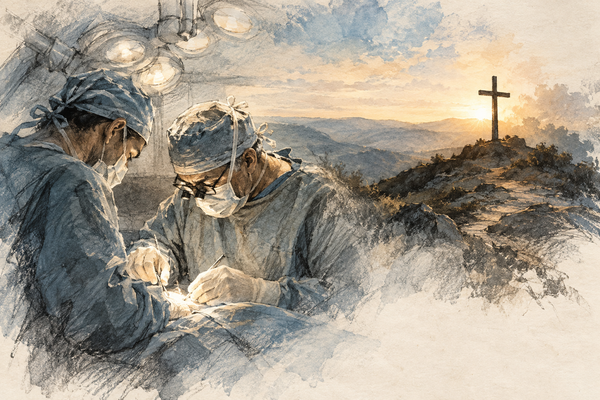
I found myself thinking, How wonderful it would be if my four-year-old son could one day know God like this—not merely know about Him, but experience Him, trust Him, discover His faithfulness and enjoy Him.
But then I paused.
Could I really pray that prayer for my son?
Could I sincerely surrender him into God's hands and ask God to lead him through whatever wildernesses or thorny paths might be necessary for him to come to that place of trust?
As a father, I wanted him to know the faithfulness of God—but instinctively, I wanted him to know it without having to walk through difficult places.
Then the Lord brought back to my mind a prayer He had taught me some time ago, when I had made my own commitment to Him:
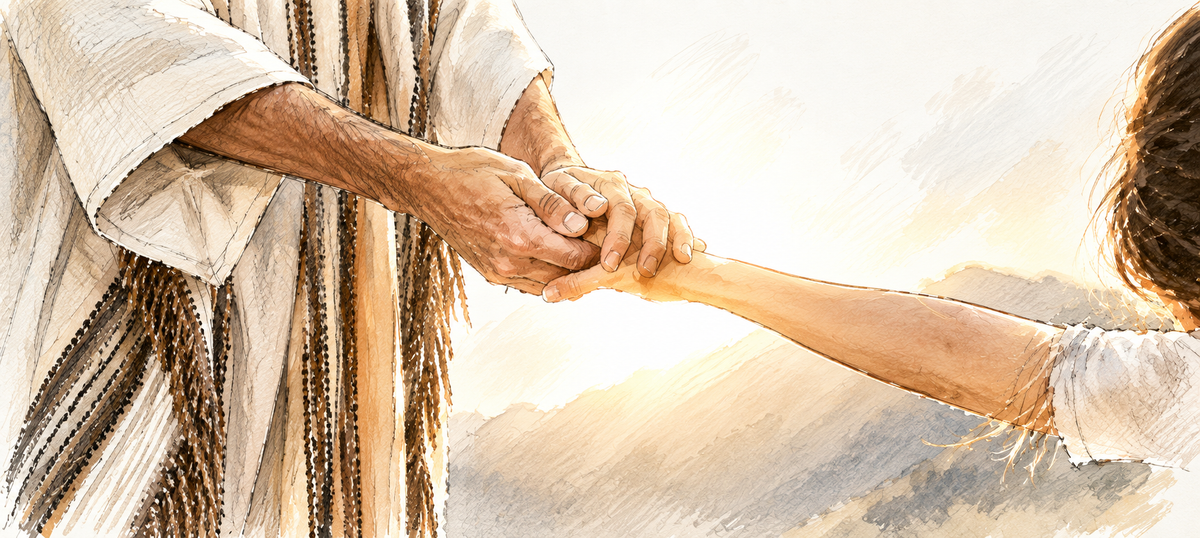
“Lord, I am ready to go anywhere You take me, if You go with me.”
That prayer suddenly became different.
I realised that I had once been willing to place my own life into God's hands with that kind of trust. Yet when it came to my child, I found myself wanting to hold him back from the very experiences through which I had come to know God's faithfulness.
I realised, too, that surrender does not mean asking God to give my son a difficult life. It means trusting God with his life.
So, with a trembling heart, I found myself able to pray:
“Lord, I entrust my son to You. I do not know the paths You will lead him through, and I do not ask for difficulty. But whatever You permit, may he know that You are with him. May he learn to trust You, experience Your faithfulness and, above everything else, enjoy You.”
And that prayer did not stop with my son. I found myself praying the same for my wife—not because I want either of them to suffer, but because I want them to know the God I have come to know in my own wildernesses.
There is something deeply humbling about surrendering the people we love most into the hands of God. We want to protect them from every valley. But sometimes faith means trusting the Shepherd more than we trust ourselves to choose the path.
Three gifts hidden within a test
There are at least three precious things that can happen when we trust God through difficulty.
1. We discover that God is trustworthy
When we lean upon God in circumstances we cannot control, we move from knowing about His faithfulness to experiencing it personally.
“I have heard that God is faithful” becomes “I have experienced that God is faithful.”
2. Our faith becomes real
Faith that is never tested can remain theoretical.
It is one thing to sing, “I trust You.” It is another thing to whisper those words through tears.
The test gives faith an opportunity to become lived experience.
3. Our testimony becomes deeper
There are songs we can sing only after walking through certain valleys. There are Scriptures that become precious only after we have needed them. There are prayers we learn only when our own strength has failed.
The testimony becomes:
“I knew God could do it. But now I know that God was with me while I waited for Him to do it.”
A different prayer
Perhaps, then, we can pray not only for deliverance from trouble, but also for God's presence and grace through it:
“Lord, whatever You permit me to walk through, do not let me walk through it without You.”
“Give me faith when I cannot understand.”
“Give me peace when I cannot change the circumstances.”
“Give me courage when I am afraid.”
“Give me obedience when I cannot see the outcome.”
“And when You deliver me, let me remember that it was Your hand that carried me.”
If You deliver me quickly, I will praise You.
If You ask me to wait, I will trust You.
If You change the situation, I will give You glory.
If You carry me through it, I will give You glory.
If I do not understand what You are doing, I will still hold on to who You are.
Because my faith is not ultimately in an outcome.
My faith is in You.
Perhaps that is what the whole story of Scripture has been teaching us.
We see the walls of Jericho falling, but forget the days of marching before they fell. We see Daniel coming out of the lions' den, but forget that he had to spend the night inside it. We see Joseph's authority in Egypt, but forget the pit and the prison. We see the resurrection, but forget the cross.
Scripture does not tell us that faith means never entering the fire.
It shows us a God who is faithful even when He leads us through it.
And perhaps this is one of the greatest prayers of faith we can pray:
“Lord, do not merely change my circumstances. Reveal Yourself to me in them.”
From pits and prisons, wildernesses and storms, fires and lions' dens, Gethsemane and Golgotha, the testimony remains:
God is faithful.
He may deliver us from the trouble.
He may deliver us through the trouble.
But He will never cease to be God in the middle of it.
And when we finally look back, perhaps we will discover that the season we most wanted God to remove became one of the places where we came to know Him most deeply.
All honour and glory belong to God alone.